
Jumping into the stock market? Oh man, it’s a wild ride. One minute, you’re feeling like the next Warren Buffett, and the next, you’re wondering if you should’ve just stuck to a savings account. Picking stocks to hang onto for the long haul—yeah, that’s a whole challenge on its own. There’s just so much noise: a million different companies, endless “hot tips,” and don’t even get me started on the endless jargon.
Honestly, figuring out which stocks are actually worth your time isn’t just about tossing darts at a list and hoping for the best. You’ve gotta know what you’re looking at. Here at finance-portoul, we’re all about cutting through the nonsense and giving people in the U.S. (and, let’s face it, anyone who’ll listen) some down-to-earth advice to help make sense of it all.
So, what’s the plan for this piece? We’re gonna break down some of the main ways folks size up stocks for long-term growth. We’ll talk about both the number-crunching side (yeah, fundamentals) and the chart-watching side (hello, technical analysis)—but don’t worry, I’ll keep the boring bits to a minimum. Whether you’re the type who’s been trading since dial-up internet or you just downloaded your first investment app yesterday, you’ll find stuff here to help you dodge some dumb mistakes and (hopefully) make smarter moves. Let’s get into it.

Understanding Long-Term Stock Investing
Alright, here’s the deal—long-term investing is basically the slow-cooker of the finance world. You pick your investments, let them chill for years (sometimes decades), and hope they turn into a feast instead of a burnt mess. It’s not like day trading, where people are glued to their screens trying to catch every little blip. Nope, here you actually care if the company’s got some real muscle: solid business, steady growth, the kind of stuff that doesn’t just vanish when the market gets cranky.
Some finance folks—yeah, those “finance-portal” types—are big on keeping your cool and not freaking out every time the market hiccups. They say, just stick to companies that aren’t dumpster fires and you’ll be fine. And the real magic? Compounding. That’s when your money starts making babies with itself, and those babies grow up and make even more money babies. It’s wild. You just have to be patient… and, honestly, a little boring. But hey, boring can get you rich.
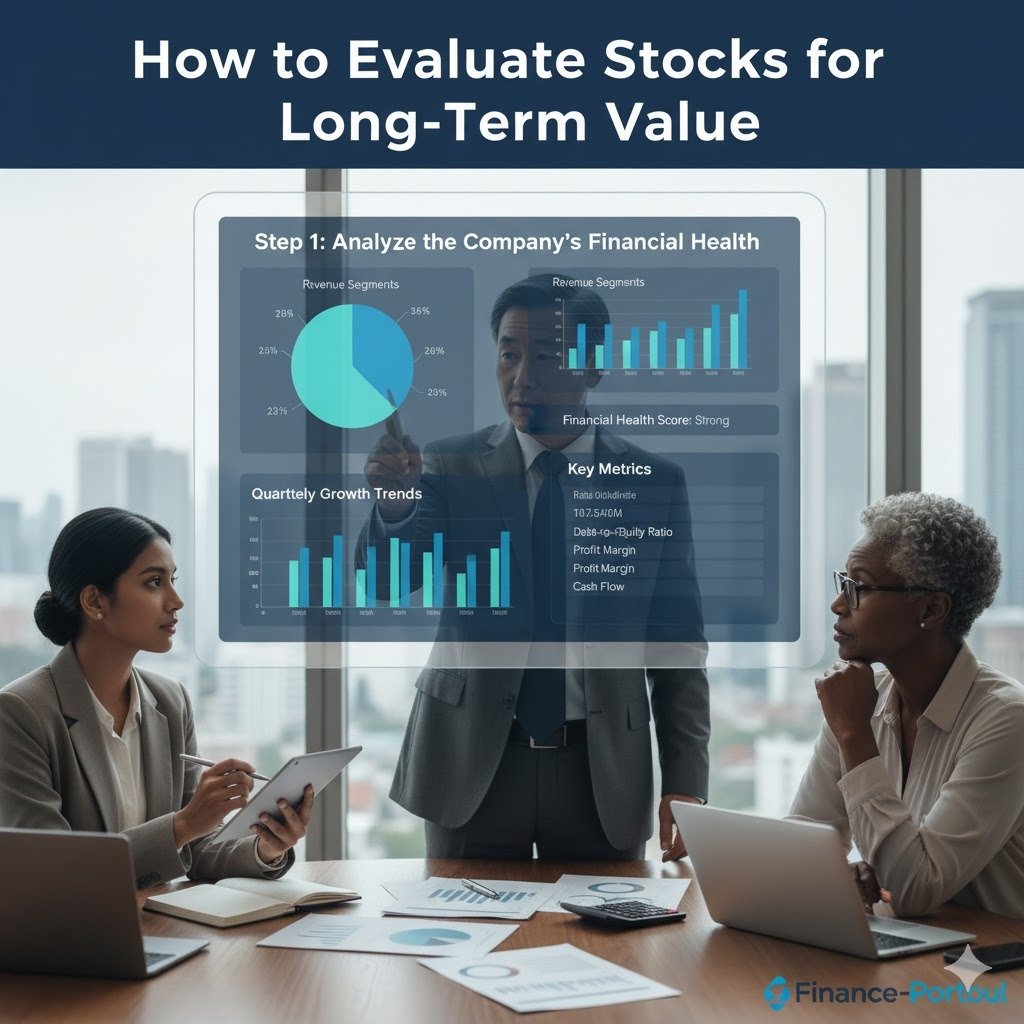
Step 1: Analyze the Company’s Financial Health
Alright, let’s get real about checking out stocks for the long haul. First thing? You gotta dig into a company’s financial guts. Like, actually look at their balance sheet, income statement, and the cash flow thing (yeah, it’s not thrilling, but trust me, it matters).
So what are you eyeballing? Revenue growth—basically, is the company pulling in more cash year after year, or are they just treading water? If they’re growing, good sign—they might be eating up more of the market.
Next up, profit margins. If a company’s making fat profits and those numbers aren’t yo-yoing all over the place, that usually means management isn’t asleep at the wheel. They know what they’re doing—probably not their first rodeo.
Debt? Look, if a company’s drowning in IOUs, that’s a red flag. Sensible debt is cool, but if the numbers are scary, they might be toast if the economy tanks.
Cash flow is where things get serious. Positive cash flow means they can reinvest, pay out dividends, and survive a rainy day without having a meltdown. Basically, it’s their financial safety net.
And yeah, at finance-portoul, we’ve got all the nerdy tools you need to break this stuff down. So you can dodge the sketchy stocks and, hopefully, not lose your shirt.
Step 2: Evaluate the Industry and Market Position
Alright, so look—a company can be rolling in cash, but if its entire industry is circling the drain? Yeah, that’s a problem. You gotta look past the balance sheet. Is the whole sector on the up and up, or is it slowly becoming obsolete? Are we talking Blockbuster or Netflix vibes here?
And let’s not forget about the competition. Is your company actually doing better than the rest, or are they just treading water? Maybe they’ve got killer branding or some patented tech that no one else can touch. That’s gold.
You really want the big picture, not just spreadsheets. If you get the industry trends and the competitive landscape, you can spot the winners before everyone else wakes up. Oh, and by the way, if you’re swimming in the U.S. market, Finance-portoul’s got a bunch of deep dives and real-world analysis to help you actually make sense of all the noise. No more guessing games with your money.

Step 3: Examine Management and Corporate Governance
When it comes to a company’s long-term value, leadership isn’t just important—it’s everything. If the folks at the top can’t steer the ship during a storm, well, good luck. You want a management team that’s been around the block, taken a few punches, and still knows how to throw one back. That track record? Yeah, it matters. Check how they handled messes before—if they only thrived when times were easy, that’s a red flag.
Now, about governance—nobody wants to invest in a circus. If the company’s rules are clear and the higher-ups aren’t shady, that’s a huge plus. Transparency isn’t just a buzzword, it’s your safety net.
And vision? Don’t even get me started. Companies that know where they’re going and actually have a plan don’t just survive—they leave the competition eating dust.
At finance-portoul, we’re always banging on about how crucial it is to size up the people running the show. Because if the management is a trainwreck, your “strategy” is basically just wishful thinking.
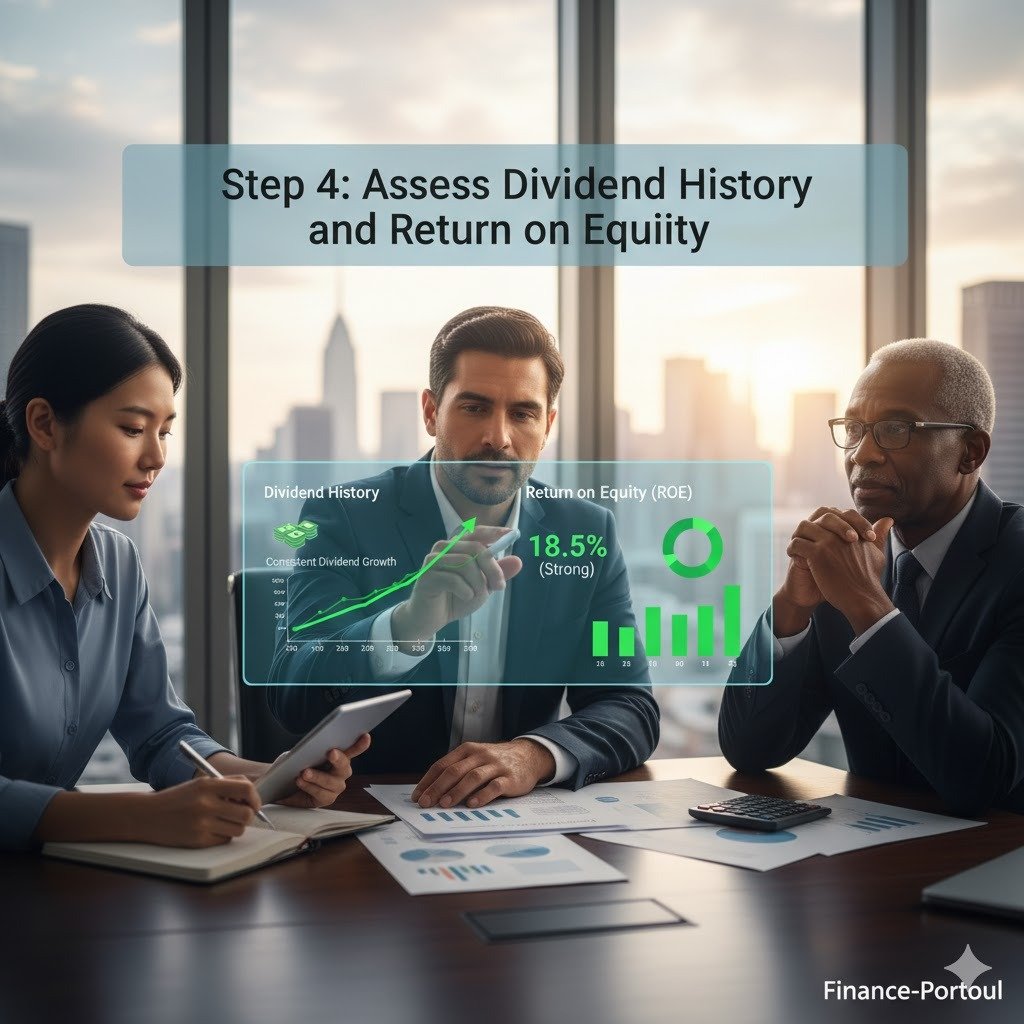
Step 4: Assess Dividend History and Return on Equity
Alright, let’s be real—if you’re in it for the long haul, you can’t just chase hype. Dividends? Now that’s the good stuff. When a company keeps handing out those regular payouts, it’s like they’re saying, “Hey, we’ve actually got our act together.” It’s a big ol’ sign they’re not about to vanish overnight and that they actually care about keeping investors happy.
Now, ROE—Return on Equity—this one’s the secret sauce. It tells you if a company actually knows how to turn your money into even more money. High ROE? That usually means the folks running the joint aren’t just collecting a paycheck; they’re making things happen. That’s what you want, right? Growth. Real, honest-to-goodness growth.
Honestly, a halfway decent investing guide (like Finance-portoul, or whatever it’s called) will hammer home just how important it is to check if those dividends are steady and the ROE isn’t in the gutter. If you’re picking stocks for the long run in the U.S., you gotta look past the surface. Find the companies that treat you right and know how to hustle. That’s where the magic happens.

Step 5: Understand Valuation Metrics
Listen, just because a company looks rock solid on paper doesn’t mean you should throw your money at it—sometimes the price tag is just ridiculous. You gotta check if it’s actually worth what it’s selling for, you know? That’s where all those fancy-sounding valuation ratios come in.
Take the P/E ratio. Basically, it’s just a way to see if a company’s stock price is out of whack compared to what it actually earns. If the number’s low, hey, maybe it’s flying under the radar.
Then there’s the P/B ratio. Kind of like checking if you’re paying way more than what the company is even worth on paper. Nobody wants to pay $100 for a $20 bill, right?
P/S ratio? That one’s handy if you’re looking at some new hotshot company that isn’t raking in profits yet but is still selling like crazy.
Anyway, the point is: don’t just blindly trust the hype or some random tip. Dig into the numbers, poke around with these ratios, and maybe—just maybe—you’ll find something that’s actually a steal. If you want some tools to make it easier, Finance-portoul’s got you covered. Or, you know, you could just guess and hope for the best (not recommended, by the way).

Step 6: Monitor Economic Indicators and Market Conditions
Honestly, if you’re playing the long game with your money, you can’t just ignore the big-picture stuff. I mean, things like interest rates, inflation, job reports, GDP—you know, all the fun grown-up numbers—can completely mess with your stocks. One minute you’re up, next minute… well, you’re sitting there refreshing your app and wondering if you should’ve just bought more coffee instead.
You gotta keep an eye on these signals. They’re like weather forecasts for your investments—ignore them and you might end up caught in a storm. And, yeah, over at finance-portoul, we’re basically glued to these numbers, serving up fresh updates so you don’t have to wade through a million reports. Gotta stay sharp if you want your portfolio to actually go somewhere, right?
Step 7: Diversify Your Portfolio
Look, if you’re just tossing all your cash into one stock and hoping for the best, you’re basically playing financial roulette. Diversification’s the name of the game—like, don’t put all your eggs in one basket, right? Spread your investments around: tech, healthcare, real estate, whatever. That way, if one sector tanks, you’re not crying into your cereal.
Honestly, Finance-portoul’s got the right idea. Build a portfolio that actually matches your long-term dreams (retire on a yacht, anyone?). Mix it up with stocks, bonds, maybe some REITs or even a sprinkle of crypto if you’re feeling spicy. The point is, you want a safety net so one lousy stock doesn’t wreck your whole setup.

Step 8: Maintain Patience and Discipline
Honestly, long-term investing is kind of a waiting game—you’ve gotta have patience, or you’ll drive yourself nuts. Stocks bounce around all over the place, and yeah, sometimes the market just tanks for a bit. That’s life. Still, if you manage to keep your cool and pay attention to the stuff that actually matters (like, you know, the fundamentals), you might end up doing pretty darn well in the long run.
People who stick to the real finance basics—not just whatever hot tip is trending—tend to freak out less and bail less when things get ugly. They keep their eyes on the prize and don’t let every dip or headline send them into panic mode. It’s not rocket science, but you’d be surprised how many folks mess it up anyway.
Conclusion
Honestly, picking stocks for the long haul? It’s not just crunching numbers—there’s a whole vibe to it. Sure, you gotta check the basics like how the company’s doing money-wise, what’s up in their industry, whether the folks running the show know what they’re doing, and—yeah—if they pay decent dividends. But sometimes, you just get a gut feeling about a company after seeing how they roll during rough patches or catching some weirdly promising trend.
Anyway, over at finance-portoul, we’re all about hooking up U.S. investors with actually useful advice and resources, not just the same old recycled tips. If you wanna stack your portfolio with companies that aren’t gonna nosedive at the first sign of trouble, you gotta dig a little deeper and trust your instincts too—not just the spreadsheets.
Want to get a leg up? Swing by finance-portoul for more tips and tools. No nonsense, just straight talk.
FAQs About Evaluating Stocks for Long-Term Value
1. How do you even start picking stocks with finance-portoul? Honestly, just dive into those financial statements—think stuff like revenue, profit margins, and whether the company’s actually making real cash or just faking it. finance-portoul’s got these tools that make it less of a headache, especially if you’re playing the long game and you’re based in the US.
2. Can finance-portoul sniff out undervalued stocks for me? Yup. It’ll break down things like P/E, P/B, and P/S ratios for you, so you’re not just guessing. Helps you spot the hidden gems with actual promise, not just hype.
3. Does management quality even matter? Oh, totally. If the people running the show are clowns, you’re in trouble. finance-portoul actually digs into who’s in charge, what they’ve done before, and if they’ve got any idea where the company’s going. You want leaders with a clue, not just a fancy title.
4. Will finance-portoul help me not put all my eggs in one basket? Heck yeah. They’ll walk you through how to spread out your investments so you don’t freak out every time a single stock dips. It’s all about keeping risk low and aiming for solid returns over time.
5. Can finance-portoul keep me in the loop with what’s happening in the market? For sure. You’ll get real-time updates on stuff like interest rates, inflation, or whatever economic drama’s unfolding. That way, you’re not caught off-guard like everyone else when the market throws a tantrum.